
Wholesale price-based inflation rose to a record high of 15.88 per cent in May on rising prices of food items and crude oil. The Wholesale Price Index-based inflation was 15.08 per cent in April and 13.11 per cent in May last year. "The high rate of inflation in May, 2022 is primarily due to rise in prices of mineral oils, crude petroleum & natural gas, food articles, basic metals, non-food articles, chemicals & chemical products and food products etc. as compared to the corresponding month of the previous year," the commerce and industry ministry said in a statement.

The output of eight core sectors rose 4.4 per cent in September on account of healthy performance by segments like natural gas, refinery products and cement, official data showed on Friday. The eight infrastructure sectors of coal, crude oil, natural gas, refinery products, fertilisers, steel, cement and electricity had grown by 0.6 per cent in September 2020, as per the data released by the commerce and industry ministry.

Exports in June rose by 23.52 per cent to $40.13 billion while the trade deficit ballooned to a record level of $26.18 billion mainly due to jump in gold and crude oil imports, the government data said on Thursday. The country's export growth in May was 20.55 per cent. Imports expanded by 57.55 per cent to $66.31 billion in June compared to the year-ago month, the data showed.

On Friday, Putin formally announced the annexation of four regions -- Donetsk, Luhansk, Kherson and Zaporizhia -- and claimed that "this is the will of millions of people".

E-commerce firms and sellers including Amazon and eBay have made recommendations to the government for a differentiated policy framework for e-commerce in the revised Foreign Trade Policy (FTP) which is expected to come into effect from April 1, 2021. This is because the existing policies on exports have catered largely to traditional, offline and business-to-business exports. Suggestions have been made to the government that through the FTP, it is important to create a conducive policy framework for e-commerce exports that lowers the entry barrier for small businesses to start exporting, according to the industry sources.

The Supreme Court on Friday said lawyers and professionals with 10 years of experience will be eligible for appointment as president and member of the state consumer commission and district forums.

The government is working towards further review and simplification of the foreign direct investment (FDI) policy to facilitate the proposed initial public offering (IPO) of the Life Insurance Corporation (LIC), Department for Promotion of Industry and Internal Trade (DPIIT) secretary Anurag Jain said on Thursday. The final decision will be taken by the Cabinet. The industry department is working together with the finance ministry's department of financial services (DFS) and department of investment and public asset management (DIPAM) towards a successful listing of the life insurer on the domestic bourses, which is expected to be the largest in India.

A decision to tap the 30 countries for exporting wheat was taken at a meeting of the commerce ministry on Thursday.

Seven Indian Institutes of Technology -- IIT-Madras, IIT-Bombay, IIT-Delhi, IIT-Kanpur, IIT-Kharagpur, IIT-Roorkee and IIT-Guwahati -- figured in the top 10 in the overall rankings.

The central government is devising a mechanism to step up screening imports to protect domestic manufacturers. The details of the online monitoring system may find mention in the foreign trade policy 2021-26, which will kick in next month. The online system will make the data available to the government as well as industry about the countries from where the goods are being imported, and their quantity and quality. The data can help domestic producers analyse the market potential for such goods, said a senior government official. In the past 16 months, the government had implemented a steel- and coal-import monitoring system.

Earlier this year, the Union Cabinet gave the management of state-run companies the freedom to decide on divesting their subsidiaries. However, the very next day a meeting was held at the top level of the Government of India, for the presentation of proposals for more autonomy for state-run companies. Interestingly, no chiefs of any of these companies were invited. It is a problem that will stare the government in the face with the state-owned banks too, as talks have again begun for inviting strategic investments in these companies.

The government has sent a proposal to the Board of Control for Cricket in India (BCCI) to organise a cricket match on August 22 between India and the rest of the world as part of celebrations to mark 75 years of India's independence.

E-commerce giants such as Amazon, Netflix and Flipkart, whose headquarters are not in India, potentially have to pay the additional levy of 2 per cent from April 1.
The country's exports rose by 47.34 per cent to $32.46 billion in June on account of healthy growth in sectors such as engineering, gems and jewellery and petroleum products, even as trade deficit aggregated at $9.4 billion during the month, according to the data released by the commerce ministry on Friday. Exports in June last year stood at $22 billion and $25 billion in June 2019. In May 2021, the outward shipment was worth $32.27 billion, while in April this year, it was $31 billion. Imports in June 2021 grew by 96.33 per cent to $41.86 billion, from $21.32 billion in June last year. In June 2019, imports stood at $41 billion.
Exporters on Thursday demanded fiscal incentives, tweaking in customs duties on certain products and credit at affordable rates in the forthcoming Budget to boost exports and create jobs. In a pre-budget virtual meeting with Finance Minister Nirmala Sitharaman, the Federation of Indian Export Organisations (FIEO) said the depreciation of the rupee against the US dollar is affecting exports' competitiveness and the sector requires more support. "Creation of employment is the biggest challenge faced by the country...We would urge the government to provide fiscal support to units which provide additional employment in the export sector," the exporter's body said.

Drones are being sold by e-retailers like Flipkart and Snapdeal for less than Rs 40,000 apiece.

Such a high level of WPI was last recorded in October 2012, when inflation was 7.4 per cent.

Billionaire Mukesh Ambani's Reliance Retail on Thursday told the government that complex legal structures have been used by some firms to bypass the country's e-commerce rules which from the very beginning do not allow foreign capital in the inventory-based model. At a meeting called by the commerce ministry on allegations that foreign online retailers created complex structures to bypass foreign investment rules and damage small traders, Amazon urged the government not to issue any clarification until investigations into its business practices had been concluded, sources said. At the meeting, Reliance Retail's representatives said the Indian e-commerce policy does not allow foreign capital in the inventory-based model and foreign investment is allowed only in pure technical infrastructure/ platform that facilitates the meeting of buyer with sellers.

HCL Tech was the top gainer in the Sensex pack, rising around 3 per cent, followed by Tech Mahindra, Tata Steel, Wipro, NTPC and Titan. Nifty advanced 187.05 points to 16,801.25.

Sources said the reshuffle will also aim at an image makeover for the party hit by school jobs scam probe.
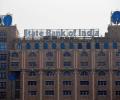
India has decided to authorise the country's biggest lender SBI to promote rupee trade with Russia and soon Moscow will name its bank to operationalise the mechanism, exporters' body FIEO said on Wednesday. The RBI in July issued a detailed circular asking banks to put in place additional arrangements for export and import transactions in Indian rupees in view of increasing interest of the global trading community in the domestic currency. Currently, a large part of bilateral trade between India and Russia is getting settled in rupee due to sanctions imposed by the US and Europe following Moscow's attack on Ukraine.

The time is opportune for doing away with the practice of a separate rail budget, and for replacing the railway ministry with an umbrella ministry of transport.

The Union Cabinet on Wednesday approved revision in guidelines for providing direct to home (DTH) services in the country under which licenses would be issued for 20 years, Union minister Prakash Javadekar said. The Union Cabinet has also approved 100 per cent FDI in the DTH broadcasting services sector, Javadekar said, adding that while the commerce ministry had spoken of 100 per cent FDI in the DTH sector, the guidelines of the information and broadcasting ministry needed to be changed.

This is the first time India is offering coalmines to private companies for commercial sale.

As per norms, sanction for prosecution of government employees accused of corruption has to be given within four months' stipulated time.

Future Retail's (FRL's) independent directors have written a second letter to the Competition Commission of India (CCI), stating American e-commerce major Amazon never intended to invest in Future Coupons (FCPL) and the representations made by the US e-commerce player were completely opposite and contradictory to their own internal correspondences as submitted before courts. The directors also wrote to CCI that Amazon has obtained approval by making deliberate misrepresentations. By actively misleading the CCI and the regulator, it has to revoke the approval granted for Amazon's investment in FCPL.

'The President of India, as advised by the prime minister, has accepted the resignation of Harsimrat Kaur Badal from the Union Council of Ministers, with immediate effect,' the Rashtrapati Bhavan said in a statement.

Violation of the provisions entails a punishment of a jail term up to five years or with fine up to Rs 1 crore or with both, the ordinance released by the Ministry of Law and Justice on Thursday said.

China said on Thursday that "progress" has been made in facilitating the return of thousands of Indian students stranded back home due to Beijing's COVID visa bans and efforts were on for "early return" of the first batch.
The wholesale price-based inflation bucked the 4-month rising trend in December 2021, and eased to 13.56 per cent, mainly on account of softening in fuel, power and manufacturing items even though food prices hardened. WPI inflation has remained in double digits for the ninth consecutive month beginning April. Inflation in November was 14.23 per cent, while in December 2020 it was 1.95 per cent.

A pan-India 'fraud-to-phone' network has been busted by security agencies, which have also arrested eight people and seized nearly 300 new mobile phones bought with stolen funds, officials said on Tuesday. Moreover, 900 mobile phones, 1,000 bank accounts and hundreds of unified payment interface (UPI) and e-commerce IDs of this gang have been identified and are under investigation. Nearly 100 bank accounts, and debit and credit cards have been frozen by the security agencies so far, officials said.

Union home secretary Ajay Bhalla issued an order excluding the non-essential items from sale by the e-commerce companies from the consolidated revised guidelines, which listed the exemption given to the services and people from the purview of the lockdown.

Modi campaigned on the issue of national security, which cannot be ensured without a strong economy.

Fifteen Cabinet ministers and 28 Ministers of State were sworn-in by President Ram Nath Kovind at a ceremony at Rashtrapati Bhavan on Wednesday evening.
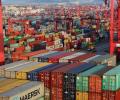
The country's exports jumped by 58.23 per cent to $34 billion in March as key sectors such as engineering, gems and jewellery and pharmaceuticals recorded healthy growth rate during the month, according to the Commerce Ministry's provisional data. Exports during April-March 2020-21, however, dipped by 7.4 per cent to $290.18 billion compared to $313.36 billion in 2019-20, the data showed. Imports during 2020-21 contracted by 18 per cent to $388.92 billion compared to $474.71 billion during 2019-20. In March 2020, the exports stood at $21.49 billion, which was a decline of about 34 per cent over March 2019 due to global slowdown induced by the Covid-19 crisis.

The wholesale price-based inflation rose to a four-month high of 14.55 per cent in March, mainly due to hardening of crude oil and commodity prices, even though vegetables witnessed easing of price pressures. As per the government data released on Monday, WPI inflation has remained in double digits for the 12th consecutive month beginning April 2021. The last time such a level of WPI was recorded was in November 2021, when inflation was 14.87 per cent.

Foreign direct investment (FDI) in India grew 40 per cent to USD 51.47 billion during April-December 2020-21, according to government data released on Thursday.
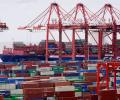
The country's exports for the first time crossed the $400 billion mark in a fiscal on healthy performance by sectors such as petroleum products, engineering, gems and jewellery, and chemicals, according to the commerce ministry's data released on Wednesday. The merchandise exports rose by by 37 per cent to $400.8 billion in 2021-22 until March 21 against $292 billion in 2020-21. Previously, the outbound shipments had touched a record of $330.07 billion in 2018-19.

Contracting for the eighth consecutive month, the output of eight core infrastructure sectors dropped by 2.5 per cent in October, mainly due to decline in production of crude oil, natural gas, refinery products and steel. The production of eight core sectors had contracted 5.5 per cent in October 2019, data released by the Commerce and Industry Ministry showed on Friday.

The wholesale price-based inflation eased for the second consecutive month in January at 12.96 per cent, even though food prices hardened, the government said on Monday. WPI inflation has remained in double digits for the tenth consecutive month beginning April 2021. Inflation in December 2021 was 13.56 per cent, while in January 2021, it was 2.51 per cent.
